
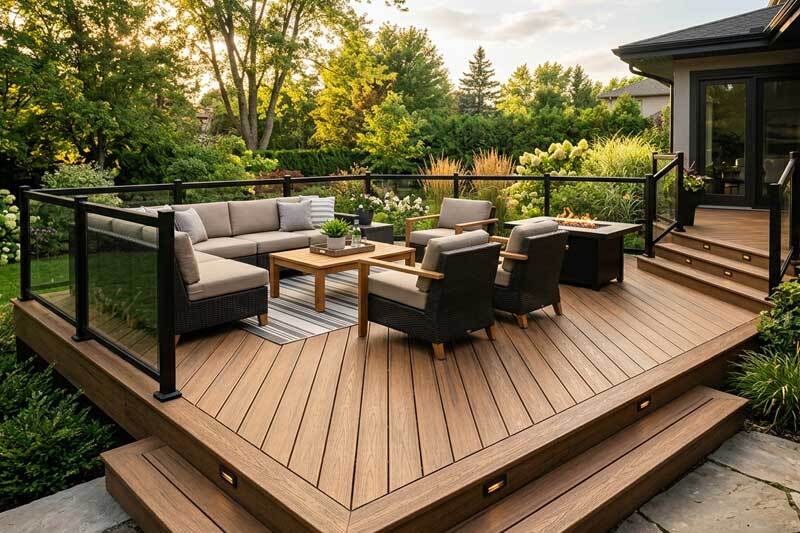
Key Takeaways
- Best Materials for Florida: Capped composite and cellular PVC decking are the top-rated choices for the local climate because they naturally resist rot, heavy salt air, and insect damage.
- Top Coastal Choice: PVC decking offers the longest overall lifespan with minimal maintenance, making it the ideal choice for low-lying or waterfront decks in Pinellas County.
- The Downside of Standard Wood: Pressure-treated wood features a lower upfront cost but requires rigorous, ongoing sealing to prevent severe warping and cracking under intense Florida UV rays.
_________________________________________________________________________________________________________
If you are planning to build or replace a deck in Pinellas County, you are likely wondering what decking material is best for your home. Building a deck in Florida is different than building one in any other part of the country.
Our local weather puts building materials through a constant beating. We face intense sun, daily summer downpours, high humidity, and salt air coming off the Gulf of Mexico. A material that lasts for decades in northern states might rot or warp here in just a few years.
Homeowners need to look closely at their options to avoid costly mistakes.
Choosing the wrong material can lead to sagging boards, faded colors, and splintering wood that hurts to walk on. This guide breaks down the most common decking material options from the perspective of a local contractor.
We will look at how different products hold up against the harsh Florida elements so you can build an outdoor space that lasts.
Why does the Florida environment limit your decking options?
Before looking at specific products, you must understand what your deck faces every day. The weather in areas like St. Petersburg, Clearwater, and Tarpon Springs is unforgiving to outdoor structures.
The first issue is the wet-and-dry cycle. The summer months bring heavy afternoon thunderstorms followed immediately by baking sunshine. When natural wood absorbs water, it swells. When the sun dries it out quickly, it shrinks.
This constant movement causes real wood to crack, split, twist, and pull away from its fasteners.
The second issue is the coastal air. Saltwater in the air accelerates the breakdown of organic materials and corrodes standard metal hardware.
The third issue is our local pests. Subterranean termites and powderpost beetles thrive in hot, humid environments, and they view traditional wood decking as a food source.
To beat these conditions, you need a material that can withstand high moisture levels and heavy sun exposure.
Why is pressure-treated wood a common baseline choice?
When evaluating choices, pressure-treated wood is usually the starting point for most homeowners. This is a very popular decking material because it has a low upfront cost and is widely available.
What is pressure treated lumber?
Pressure-treated lumber is standard wood, usually southern yellow pine, that goes through a high-pressure chemical process. This treatment forces chemical preservatives deep into the wood cells. These chemicals protect the boards against rot, fungal decay, and insect damage.
It forms the structural framework for almost every deck we build, regardless of what material goes on top.
What are the drawbacks of using it for deck boards?
Using it for the framing is smart, but using it for the actual deck boards comes with long-term challenges in Florida. Even with chemical treatments, pine is still a soft, organic material. The intense Florida sun bakes the moisture out of the boards, leading to severe cupping and warping.
If you choose a wood deck, you must accept that it will require regular maintenance to stay safe and look good. This maintenance requires annual power washing, staining, and sealing.
Without this maintenance to preserve the wood, the surface will quickly develop splinters, making it uncomfortable for bare feet.
What makes composite decking different?
If you want to move away from the constant upkeep of wood, composite decking is an excellent alternative. This material is engineered specifically to look like wood while eliminating its major weaknesses.
How is wood composite manufactured?
A wood composite board is made from a blend of plastic and wood materials. Manufacturers mix recycled wood fibers like sawdust with waste plastics. This mixture is heated, formed into board shapes, and cooled.
Most modern composite boards also feature a tough outer plastic shell, often called a cap, which protects the inner core from water and sun exposure.
What are the benefits of composite boards?
Because these boards contain a mix of materials, they do not absorb water the way a standard wood board does. They will not splinter, warp, or split under the hot sun. They are also completely resistant to termites and other wood-boring bugs.
Additionally, many brands use recycled materials to make their products, making it a good choice for eco-conscious homeowners. You get the warm look of wood without the splinters or the need for constant staining.
Why is PVC decking the top choice for coastal areas?
For homes sitting directly on the water or near beach areas, PVC decking stands out as the premium option. It offers the highest level of protection against moisture and heat.
What is PVC decking?
Unlike composite material, PVC boards contain absolutely no wood or organic fibers. They are made entirely from cellular polyvinyl chloride. Because there is no wood content, the boards cannot absorb moisture.
Why does it excel in Pinellas County?
PVC boards are completely immune to rot and mold. If your deck sits low to the ground over a damp yard or right next to a swimming pool, this material will not degrade. It also resists stains from sunscreen, spilled food, and grill grease better than almost any other option.
Another major benefit for Florida homeowners is heat dissipation. Modern PVC boards are designed to release heat faster than composites, meaning they stay cooler under bare feet during a hot July afternoon. It gives you a truly minimal-maintenance outdoor space.
How do installation requirements change by material?
The material you choose changes how the deck must be built. You cannot install composite or PVC boards the exact same way you install standard pine.
- Joist Spacing: Wood boards are stiff and can easily span joists spaced 24 inches apart. Composite and PVC boards are more flexible. They usually require joists to be spaced no more than 16 inches apart on center, or 12 inches apart if you are running the boards diagonally.
- Thermal Expansion: Plastic expands and contracts with temperature changes. Builders must leave precise gaps at the ends of the boards so they have room to move without buckling.
- Fastener Types: High-end synthetic decks look best with hidden fastener systems. These clips fit into grooves on the side of the boards, creating a clean surface with no visible screw heads.
Common Questions About Decking Materials
Does composite decking get too hot to walk on in Florida?
Darker colors of composite decking can get very warm under direct sunlight. However, newer generations of composite and PVC boards use heat-reflective technology to keep surface temperatures lower.
If your deck has no shade, choosing a lighter color like tan, light gray, or beige will help keep the surface comfortable for bare feet.
How long does a pressure-treated wood deck last in Florida?
A standard wood deck in Florida generally lasts between 10 and 15 years if it receives proper care. If it is ignored and never sealed, the boards can fail in as little as 5 to 7 years due to severe rot and warping from the humidity.
Can I use synthetic deck boards on my existing wood frame?
Yes, you can often replace old wood boards with synthetic ones if the underlying wood structure is still in good condition. You must inspect the joists for rot and make sure the spacing matches the requirements for the new boards.
Adding joist flashing tape during the process helps protect the old frame from water damage.
Are composite and PVC decks completely maintenance free?
No material is completely maintenance free, but synthetic options are close. They do not require sanding, staining, or sealing.
Your only maintenance involves spraying the deck down with a hose and washing away dirt, pollen, or leaves with mild soap and a soft brush a few times a year.
How does salt air affect deck fasteners?
Salt air accelerates rust on standard galvanized screws. For any deck built in Pinellas County, it is smart to use high-grade stainless steel screws or hidden fasteners.
Stainless steel resists brackish water and salt air, ensuring the boards stay locked down tightly for decades.
Ready to build your durable Florida deck?
Investing in the right material ensures your outdoor living space remains beautiful and safe for years to come. Whether you prefer the unmatched durability of premium PVC or the balance of capped composite, hiring a local expert who understands coastal building requirements makes all the difference.
We specialize in designing and building custom, low-maintenance decks that stand up to the toughest Florida weather.
What Is The 3/4/5 Rule For Deck Building In Florida?
August 6, 2026[…] Distribution: Square subframes prevent uneven board gaps, maintain clean lines on straight-edged composite materials, and evenly distribute structural loads during heavy storm […]
How To Prepare A Deck Before A Hurricane In Florida
August 20, 2026[…] a hurricane in Florida heads toward Pinellas County, high winds and salt air can turn an unsecured outdoor space into a hazard zone. Knowing how to […]