
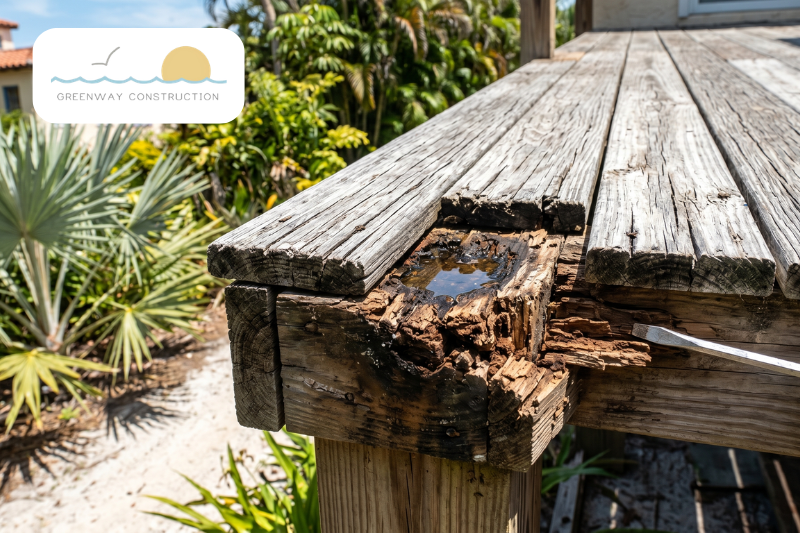
Key Takeaways: Protecting Your Investment
- The Substructure is Key: Most wood rot starts where you can’t see it. Using Joist Tape and flashing tape is the #1 way to double the life of your deck’s frame.
- Don’t Trap Moisture: Proper airflow is essential in Pinellas County. Ensure deck boards have a 3/16″ gap to prevent “moisture sandwiches” that lead to dry rot.
- Treat the Raw Edges: Any time treated lumber is cut, the internal wood fiber is exposed. Always apply an end-cut solution to maintain the integrity of the chemical treatment.
- UV Defense: UV rays break down wood lignin and fade the composite. Choose UV-resistant materials or apply high-quality sealants annually to prevent premature wear and tear.
Building a deck in the Sunshine State is a dream, but without the right preventative measures, that dream can quickly turn into a structural nightmare. Between the relentless 2026 UV levels and the moisture from our daily summer storms, wood rot and wear and tear are the primary enemies of any Pinellas County homeowner.
Whether you are using treated lumber or composite decking, the longevity of your outdoor living space depends on how you protect the foundation joists and the substructure. Here are five expert-vetted ways to ensure your deck lasts up to 50 years.
1. Use Joist Tape and Flashing Tape
Most deck failures don’t happen on the surface; they happen where the deck boards meet the foundation joists. When rain sits in the small gap between the board and the joist, it creates a “moisture sandwich” that rots the wood from the inside out.
We highly recommend applying Joist Tape (a butyl-based flashing tape) to the top of all joists and the ledger board during construction. This creates a waterproof seal that prevents water from seeping into screw holes and sitting on the wood. It is the single most effective way to prevent rot in a humid climate.
2. Protect the Ledger Board
The ledger board is the piece of treated lumber that attaches your deck to your house. If water gets behind this board, it can rot your home’s rim joist, leading to thousands of dollars in structural damage.
- Pro Tip: Ensure your builder uses proper “Z-flashing” and self-sealing tape to redirect water away from the house.
3. Treat Cut Ends of Wood Fiber
When decking materials or treated woods are cut to size on-site, the “factory seal” of the pressure treatment is broken. This leaves the raw wood fiber exposed to insects and moisture.
- The Solution: Always use a brush-on end-cut solution to treat wood at every cross-cut. This ensures that the heart of your wood decking is as protected as the surface.
4. Prioritize Airflow and Spacing
In Florida, “wet” is inevitable; “staying wet” is the problem. Proper minimal upkeep starts with design. Ensure there is at least a 3/16″ gap between your deck boards to allow for drainage and airflow.
- Avoid “skirting” your deck all the way to the ground without ventilation. If air can’t circulate under the foundation joists, the humidity will stay trapped, creating a greenhouse effect that accelerates dry rot.
5. Combat UV with “Cool-Deck” Technology
While wood rot kills the structure, UV damage kills the aesthetics. The Florida sun can bake the life out of decking materials, causing boards to splinter or fade.
- If choosing composite decking, look for 2026 “Heat-Mitigating” collections. These reflect more sunlight, keeping the deck cooler and preventing the “bleaching” effect of the sun.
- For wood decking, a pressure-free welcome isn’t enough; you must use a high-quality UV-rated sealant every year to act as “sunscreen” for your wood.
Comparison: Protection Methods for Substructure Longevity
| Method | Cost | Primary Benefit | ROI |
| Joist Tape | Low | Stops rot between boards/joists | 10/10 |
| End-Cut Solution | Minimal | Protects raw wood fiber from insects | 9/10 |
| Ledger Flashing | Moderate | Prevents structural damage to the home | Essential |
| Annual Sealing | Recurring | Prevents UV cracking and graying | High |
Summary of Maintenance Requirements
The goal is minimal upkeep. While composite decking requires very little surface care beyond basic glass cleaning and a soap-and-water scrub, the substructure (the wood underneath) still needs protection. By using flashing tape and treated lumber correctly, you can extend the life of your deck by decades.
Don’t let the Florida elements win. By focusing on these five areas during the build phase, you ensure your deck remains a safe, beautiful retreat for years to come.
Ready to build a rot-proof deck?
Greenway Construction is the leader in durable, Florida-ready outdoor spaces. Contact us today to schedule your pressure-free welcome and free quote!
What Decking Material Is Best For Florida Homes?
July 10, 2026[…] The Downside of Standard Wood: Pressure-treated wood features a lower upfront cost but requires rigorous, ongoing sealing to prevent severe warping and cracking under intense Florida UV rays. […]